How to Build a Pet Business That Doesn’t Depend on You 24/7
Most pet professionals start their business for freedom.
Freedom from a boss.
Freedom to set their own schedule.
Freedom to do work they love.
But somewhere along the way, that freedom turns into 60 hour weeks, constant notifications, and the feeling that if you step away for two days, everything might fall apart.
If you are a dog groomer, pet sitter, dog walker, boarder, trainer, or breeder, here is the truth:
If your business cannot run without you, you do not own a business yet. You own a job.
The good news is this can change. And it starts with structure.
Here is how to build a pet business that supports your life instead of consuming it.
1. Set Client Expectations Early

One reason owners struggle to step back is because clients are used to them personally doing everything.
If every voicemail says your name.
If every email is written in first person.
If your website says “I” instead of “we.”
Clients will expect you every time.
You can gradually shift this.
Start using language that reflects a team. Introduce staff members on your website. Highlight shared responsibility. Let clients see that your business is bigger than just you.
When transitions happen slowly and clearly, clients adjust much more easily than you think.
2. Create Clear Systems for Everything
If your team constantly asks you questions, it usually means one thing. The process lives in your head.
That is not scalable.
Standard Operating Procedures give your business consistency. They protect your quality even when you are not there.
Every pet business should document:
How to respond to new inquiries
How booking and scheduling works
How to handle cancellations
Emergency protocols
Payment processing steps
Client onboarding
You do not need anything fancy. Record yourself doing tasks. Write simple checklists. Create step by step instructions.
When your systems are clear, your stress decreases dramatically.
3. Strengthen Your Team Before You Expand It

Many pet business owners think the solution is hiring more people. But often, the first step is developing the team you already have.
Look at your current staff and ask:
Who is naturally organized?
Who communicates clearly with clients?
Who handles pressure calmly?
Who shows leadership tendencies?
Not everyone who works well with animals is comfortable handling clients or logistics. Pay attention to personality traits, not just technical skill.
Sometimes promoting someone into a light leadership or admin role can give you breathing room faster than hiring someone brand new.
Delegation starts with trust. And trust starts with clarity.
4. Know Your Numbers
Stepping back is not just operational. It is financial.
Track:
Monthly revenue
Monthly expenses
Profit margins
Seasonal trends
Emergency savings
If you do not know whether your business is consistently profitable, it will always feel risky to reduce your workload.
Clarity reduces fear.Test Small Absences
You do not need to disappear for a month immediately.
Start small.
Take a weekend away and avoid checking messages.
Let your team handle the schedule for a few days.
Delegate one task fully and resist the urge to micromanage it.
Pay attention to what breaks. Then improve the system.
Small tests build confidence.
5. Test Small Absences

You do not need to disappear for a month immediately.
Start small.
Take a weekend away and avoid checking messages.
Let your team handle the schedule for a few days.
Delegate one task fully and resist the urge to micromanage it.
Pay attention to what breaks. Then improve the system.
Small tests build confidence.
Stepping back is not just operational. It is financial.
Track:
Monthly revenue
Monthly expenses
Profit margins
Seasonal trends
Emergency savings
If you do not know whether your business is consistently profitable, it will always feel risky to reduce your workload.
Clarity reduces fear.
6. Fix the Hidden Bottleneck
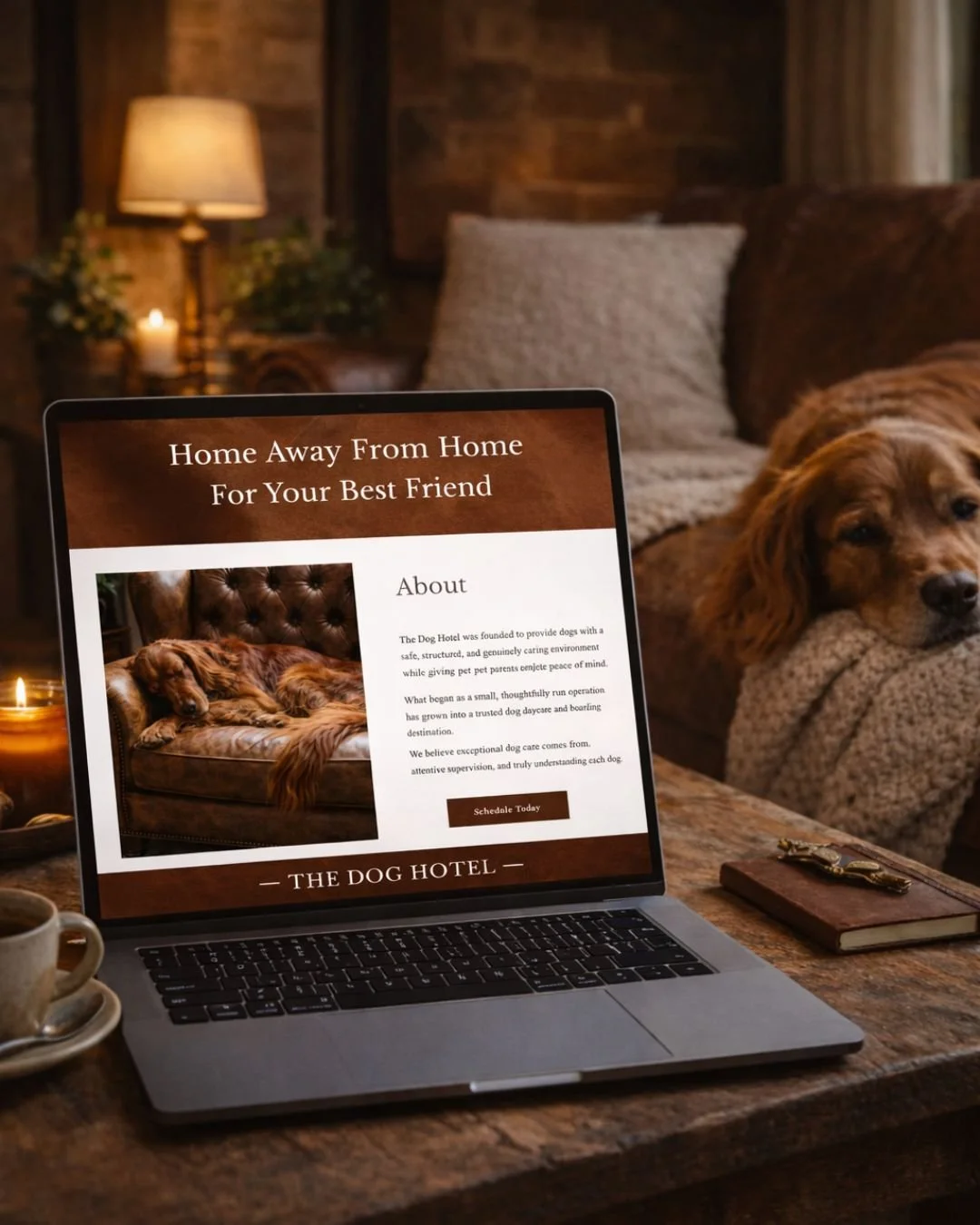
Here is something many pet professionals overlook.
If your website is outdated, confusing, or nonexistent, you remain the bottleneck.
Without a proper website:
Clients message you for basic information
You answer repetitive questions
Booking takes manual effort
Policies are explained individually
Your brand depends on personal communication
A well designed website changes that.
Your website should:
Clearly explain your services
Answer common questions
Outline policies
Introduce your team
Collect inquiries
Support online booking
Reflect your professionalism
When your website handles information and structure, you do not have to. That is how you begin separating yourself from daily operations.
7. Shift Your Mindset
This is often the hardest part.
Many pet business owners believe that if they are not personally doing the work, quality will suffer.
But ask yourself:
Are you building a business, or are you just building a very demanding job?
Delegation is uncomfortable at first. Letting go feels risky. But if you document systems, train properly, and hire intentionally, your team can maintain your standards.
Sometimes they can even improve them.
And you deserve a life outside of your business.
Your Pet Business Should Create Freedom
You did not start your pet business to feel trapped.
You started it because you love animals and wanted control over your time and income.
Building a self sustaining pet business takes intentional structure, systems, team development, and strong branding.
It also requires a professional online foundation that supports growth instead of creating more manual work for you.
If your current website is not helping you scale, streamline, and step back, it may be time for something built with long term growth in mind.
As a website designer specializing in pet businesses, I design sites that do more than look beautiful. They help automate, clarify, and position your business as established and scalable.
Because your pet business should support your life. Not run it.
